
There’s a common belief that the only way to make money sewing is to constantly trade time for dollars. You sew one item, you sell one item. You stop sewing, the income stops.
But in 2026, that’s no longer true.
Today, sewing skills can be turned into digital products, repeatable systems, automated sales, printable patterns, ad income, affiliate income, and scalable handmade products that continue earning long after the work is finished.
Passive income from sewing doesn’t mean you never work again. It means you build income streams that continue paying you repeatedly from work you already completed.
That’s the goal:
- Create once
- Sell repeatedly
- Build systems
- Let your sewing knowledge work for you
If you love sewing but want more financial freedom, this guide will walk you through realistic ways to turn your sewing skills into passive income — even if you’re starting with a basic sewing machine and a small budget.
What Passive Income Actually Means for Sewers
Passive income is often misunderstood online.
You will still:
- Create products
- Build systems
- Photograph items
- Write listings
- Market your work
But instead of earning money only once, you create assets that can sell over and over again.
Examples:
- A sewing pattern that sells 500 times
- A blog post that earns ad income every month
- A Pinterest pin bringing traffic for years
- A digital sewing planner downloaded repeatedly
- A YouTube tutorial earning affiliate commissions
The key is building things that scale beyond your time.
Why Sewing Is a Great Passive Income Skill
Sewing has several advantages over many other side hustles:
1. It combines physical and digital opportunities
You can sell:
- Handmade products
- Digital patterns
- Printables
- Tutorials
- Courses
- Templates
- Kits
2. Sewing audiences are highly loyal
People who sew:
- Save patterns
- Return to favorite creators
- Join email lists
- Purchase repeatedly
- Share recommendations
That creates long-term income potential.
3. Sewing content performs well on Pinterest
Pinterest is one of the best platforms for sewing traffic because users actively search for:
- Sewing tutorials
- Patterns
- Gift ideas
- Beginner projects
- Fabric inspiration
Unlike social media posts that disappear quickly, Pinterest content can generate traffic for years.
4. Handmade niches are still growing
Consumers increasingly want:
- Handmade products
- Personalized gifts
- Sustainable products
- Unique items
- Small business products
That creates ongoing demand.
The Biggest Mistake Sewers Make
Most beginners only focus on selling finished handmade items.
That creates a problem:
- You constantly need inventory
- You must keep sewing to make money
- Burnout happens fast
The smarter approach is building multiple layers of income around your sewing skills.
Think like this:
| Income Type | Example |
|---|---|
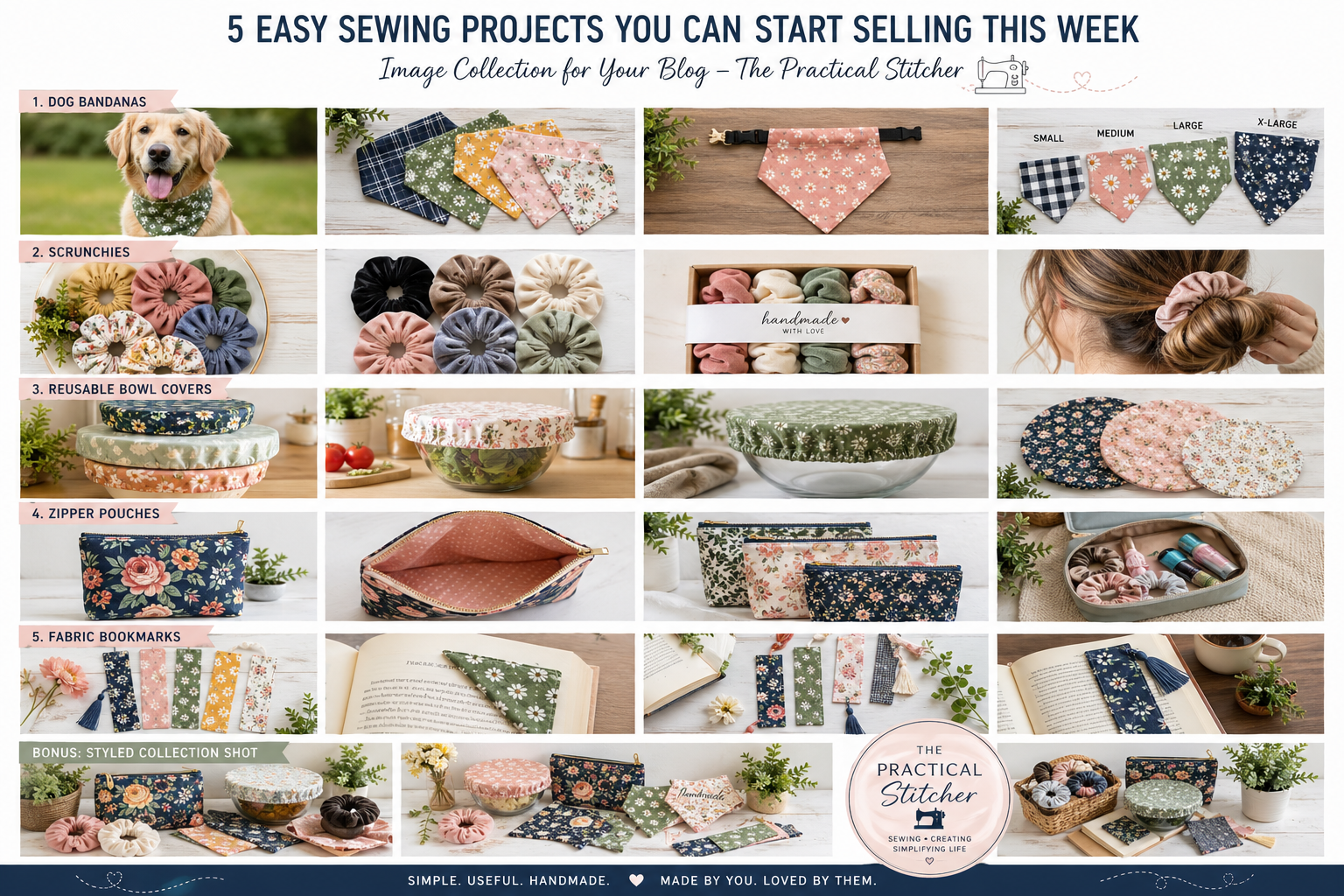
| Handmade products | Dog bandanas |
| Digital products | Printable sewing patterns |
| Content income | Blog posts |
| Affiliate income | Sewing supply recommendations |
| Ad income | Pinterest/blog traffic |
| Educational products | Tutorials and guides |
The goal is diversification.
1. Sell Digital Sewing Patterns
One of the best passive income opportunities in sewing is digital patterns.
You create the pattern once and sell it repeatedly without shipping physical products.
Popular digital sewing patterns include:
- Dog bandanas
- Tote bags
- Zipper pouches
- Pillow covers
- Aprons
- Scrunchies
- Baby bibs
- Seasonal decor
- Table runners
- Beginner clothing items
Why Patterns Work So Well
Patterns are:
- Instant downloads
- Low overhead
- Easy to scale
- Great for Etsy
- Perfect for Pinterest marketing
You don’t need a massive audience to start making sales.
Tips for Creating Better Sewing Patterns
Professional patterns should include:
- Clear measurements
- Supply lists
- Step-by-step instructions
- Photos or illustrations
- Printable pattern pieces
- Beginner-friendly directions
The more polished your patterns look, the more trustworthy your shop becomes.
Where to Sell Sewing Patterns
Etsy
Still one of the easiest places to start.
Great for:
- Beginner traffic
- Search visibility
- Instant downloads
Your Own Website
Eventually, this gives you:
- More profit
- Better branding
- Email list growth
Creative Market or Shopify
Excellent for scaling later.
2. Start a Sewing Blog
A sewing blog can become a powerful passive income asset.
Every helpful article becomes a long-term traffic source.
Examples:
- “How to Sew Straight Lines”
- “Best Fabrics for Dog Bandanas”
- “Beginner Sewing Projects”
- “How to Read a Sewing Pattern”
- “Sewing Machine Maintenance Tips”
These topics continue attracting readers year after year.
Ways Sewing Blogs Make Money
Display Ads
Once traffic grows, ads can generate recurring monthly income.
Affiliate Marketing
Recommend:
- Sewing machines
- Rotary cutters
- Fabric
- Thread
- Irons
- Pattern paper
- Storage products
You earn commissions when readers buy through your links.
Digital Products
Sell:
- Patterns
- Checklists
- Printable planners
- Sewing journals
- Tutorials
Sponsored Posts
Brands may eventually pay for reviews or tutorials.
3. Use Pinterest to Drive Traffic Automatically
Pinterest is one of the most underrated passive income tools for sewing businesses.
Unlike Instagram posts, Pinterest pins can continue bringing traffic for years.
One blog post can generate:
- Blog visits
- Etsy sales
- Email subscribers
- Affiliate commissions
Pinterest Content Ideas
Create pins for:
- Sewing tutorials
- Beginner tips
- Sewing room ideas
- Gift guides
- Fabric recommendations
- Seasonal projects
- Pattern launches
The best sewing pins usually include:
- Bright photos
- Clear text overlays
- Beginner-friendly titles
- Vertical formatting
4. Create Printable Sewing Resources
Printables are easy passive income products because they require no shipping.
Examples:
- Project planners
- Measurement trackers
- Fabric inventory sheets
- Sewing machine maintenance logs
- Pattern organization pages
- Craft fair prep checklists
- Pricing worksheets
- Sewing business planners
These can sell on:
- Etsy
- Your website
- Gumroad
5. Create Sewing Tutorials on YouTube
YouTube content can continue earning income long after it’s uploaded.
Sewing tutorials are highly searchable.
Popular video topics:
- Beginner sewing basics
- How to sew zippers
- How to cut fabric correctly
- Easy gifts to sew
- Sewing hacks
- Pattern tutorials
How YouTube Becomes Passive Income
Ad Revenue
Once monetized, videos can generate recurring monthly income.
Affiliate Links
Link your favorite tools and materials.
Product Sales
Videos can drive traffic to:
- Etsy shops
- Blog posts
- Printable products
- Email lists
6. Build an Email List
Many creators skip this step, but email lists are extremely valuable.
Social media platforms can change overnight.
An email list gives you direct access to your audience.
What to Offer as a Freebie
Great sewing freebies include:
- Beginner sewing checklists
- Printable planners
- Small sewing patterns
- Fabric guides
- Gift sewing cheat sheets
This grows your audience automatically over time.
7. Create Sewing Templates and SVG Files
If you own a Cricut or cutting machine, SVG files can become another passive income stream.
Ideas:
- Quilt labels
- Sewing room signs
- Fabric bin labels
- Care tags
- Iron-on graphics
- Craft room organization files
These pair beautifully with sewing audiences.
8. Sell Sewing Business Resources
Many beginners want help turning sewing into a business.
You can create:
- Pricing calculators
- Etsy listing templates
- Product photography guides
- Vendor booth checklists
- Branding templates
- Product launch planners
You’re not just selling sewing anymore.
You’re selling solutions.
9. Create Repeatable Handmade Products
Physical products can become semi-passive if they are:
- Quick to make
- Batch-produced
- Easy to photograph
- Easy to package
Good options:
- Dog bandanas
- Bowl cozies
- Scrunchies
- Reusable paper towels
- Tote bags
- Zipper pouches
The goal is efficiency.
Batch Production Tips
Instead of making one item at a time:
- Cut multiple pieces at once
- Sew assembly-line style
- Photograph products in batches
- Schedule shipping days
This reduces burnout dramatically.
10. License Your Designs
As your audience grows, you may eventually license:
- Fabric designs
- Pattern designs
- Artwork
- Tutorials
This is an advanced income stream, but it can become highly passive over time.
11. Create Seasonal Sewing Content
Seasonal sewing projects perform extremely well online.
Examples:
- Christmas gifts
- Halloween costumes
- Back-to-school items
- Summer tote bags
- Easter baskets
- Pet holiday accessories
Seasonal traffic repeats every year.
That means one strong blog post or pattern can continue earning every season.
12. Build a Sewing Brand Instead of Just a Shop
A brand creates trust.
People return to brands they recognize.
Your branding should feel:
- Consistent
- Friendly
- Helpful
- Beginner-accessible
This is where your identity as a brand becomes powerful.
How Long Does Passive Income Take?
Most sewing passive income businesses grow gradually.
Typical timeline:
| Time Frame | Likely Results |
|---|---|
| 1–3 months | First Etsy sales |
| 3–6 months | Pinterest traffic growth |
| 6–12 months | Consistent digital product sales |
| 1–2 years | Significant recurring traffic and income |
The key is consistency.
Passive income compounds.
A Simple Sewing Passive Income Strategy for Beginners
If you feel overwhelmed, start here.
Month 1
- Open Etsy shop
- Create 1–2 digital patterns
- Start Pinterest account
Month 2
- Publish 4 blog posts
- Create 20 Pinterest pins
- Offer one free printable
Month 3
- Add affiliate links
- Grow email list
- Create another pattern
Month 4+
- Batch-create content
- Add YouTube tutorials
- Expand digital products
Small consistent action wins.
What Makes Sewing Passive Income Actually Work
The most successful sewing creators do three things well:
1. They solve beginner problems
People search for:
- Simple projects
- Easy instructions
- Quick wins
2. They create searchable content
Evergreen topics outperform trends long term.
3. They build systems
Systems create freedom.
Common Passive Income Mistakes
Trying to Do Everything at Once
Start with:
- One product
- One platform
- One traffic source
Ignoring SEO and Pinterest
Beautiful products alone are not enough.
People must find you.
Underpricing Digital Products
Digital products have enormous scalability.
Price based on value, not just file size.
Quitting Too Early
Most creators stop before momentum begins.
Consistency matters more than perfection.
The Best Passive Income Combination for Sewers
One of the smartest setups looks like this:
Drives traffic
↓
Blog
Builds trust and ad income
↓
Email List
Creates repeat customers
↓
Etsy Shop
Sells digital products
This creates a complete ecosystem.
Final Thoughts
Turning sewing into passive income is less about sewing faster and more about building smarter.
Your sewing skills are valuable far beyond finished handmade products.
You can turn them into:
- Digital patterns
- Blog income
- Pinterest traffic
- Affiliate marketing
- Printables
- Tutorials
- Repeatable systems
And the best part?
You don’t need a huge budget or a giant audience to start.
You already have:
- A strong niche
- Valuable skills
- Branding direction
- Content ideas
- Products people want
Now the goal is consistency.
Start small.
Build systems.
Create once and sell repeatedly.
That’s how sewing becomes passive income.
Subscribe to our newsletter!