This post may contain affiliate links. If you purchase through one of these links, I may earn a small commission at no additional cost to you.
You do not need an entire craft room, expensive fabric, or advanced sewing skills to refresh your home with handmade décor. With a few basic supplies and a free weekend, you can create useful and attractive pieces that make your space feel more personal.
Home décor projects are especially satisfying because many of them use simple shapes, straight seams, and small amounts of fabric. They are also a great way to practice your sewing skills without committing to a complicated pattern.
Whether you want to update your living room, organize your kitchen, or add a handmade touch to your bedroom, these easy home décor projects can be completed in just a few hours.
1. Envelope Pillow Covers
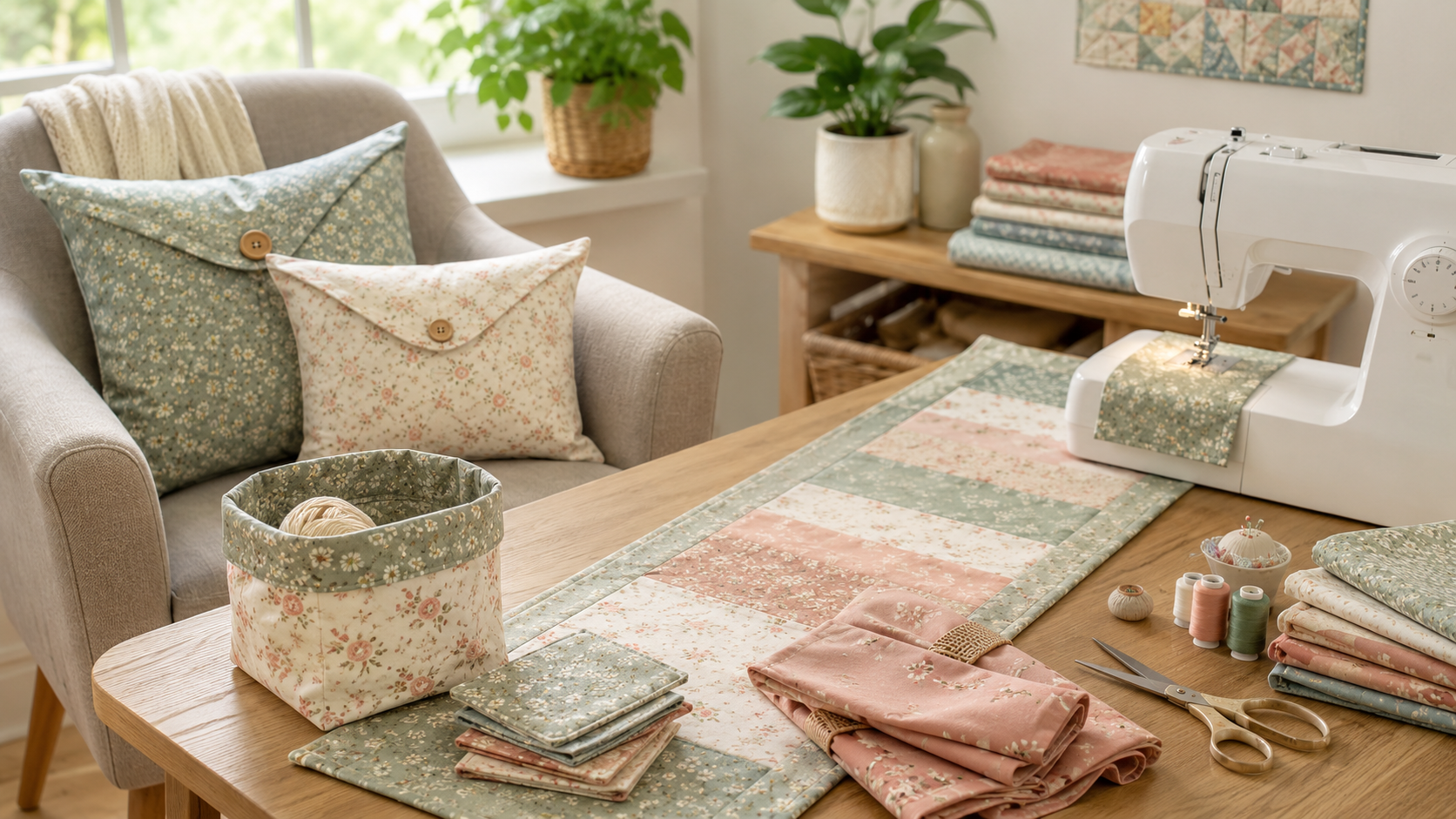
Envelope pillow covers are one of the easiest ways to give a room a quick makeover. Because the back panels overlap, you do not need to install a zipper or sew buttonholes.
Choose fabric that coordinates with your furniture, curtains, or seasonal decorations. Cotton canvas, home décor fabric, quilting cotton, and lightweight upholstery fabric are all good options.
Basic supplies:
- Fabric
- Pillow form
- Coordinating thread
- Scissors or rotary cutter
- Ruler
- Pins or clips
- Sewing machine
Measure the pillow form and add approximately one inch to the height and width for seam allowances. Cut one front panel and two overlapping back panels. Hem one edge of each back panel, layer the pieces with the right sides together, and sew around the outside.
Turn the cover right side out, insert the pillow form, and your room has an instant update.
2. Reversible Table Runner
A table runner can add color and texture to a dining table, coffee table, entryway table, or kitchen island. Making it reversible gives you two decorating options in one project.
Select two coordinating fabrics and cut them to the same size. Place the fabrics with the right sides together and sew around the edges, leaving a small opening for turning.
Clip the corners, turn the runner right side out, press it flat, and topstitch around the perimeter to close the opening.
You can create one side for everyday use and another for a holiday or special occasion.
3. Fabric Storage Baskets
Fabric baskets are both decorative and practical. Use them to organize sewing supplies, remote controls, mail, toiletries, toys, craft materials, or small kitchen items.
For a sturdy basket, use canvas, denim, upholstery fabric, or quilting cotton reinforced with fusible interfacing.
Most fabric baskets are made by sewing an outer fabric basket and a lining separately. The corners are boxed to create a flat bottom. The lining and outer basket are then joined at the top.
Add handles using fabric strips, cotton webbing, or faux leather for an extra decorative touch.
4. Cloth Napkins
Cloth napkins are simple, reusable, and perfect for practicing hems. They can also make an everyday meal feel more special.
Cut squares of cotton or linen fabric in your preferred size. A finished measurement between 16 and 20 inches works well for most dinner napkins.
Fold each raw edge under twice, press carefully, and stitch around all four sides. Mitered corners can create a more professional finish, but a basic double-fold hem works perfectly for beginners.
Make a matching set or mix several coordinating prints for a casual, collected look.
5. Simple Fabric Coasters
Fabric coasters are a great project for using scraps. They are quick to sew and make useful additions to your living room, bedroom, office, or patio.
Cut two fabric squares and one square of batting for each coaster. Layer the pieces, sew around the edges, and leave a small opening for turning.
Turn the coaster right side out, press it flat, and topstitch around the outside. You can also sew a simple square, X, or decorative pattern through the center to keep the layers in place.
A set of four fabric coasters also makes an easy handmade gift.
6. Hanging Kitchen Towels
A hanging kitchen towel stays attached to a cabinet or oven handle, making it less likely to end up on the floor.
You can make one by attaching a fabric topper to a purchased hand towel. Add a button, snap, or hook-and-loop closure so the towel can wrap around a handle.
This project is a fun way to coordinate your kitchen towels with your favorite fabric prints. It is also useful for holiday decorating because the fabric topper can be changed for each season.
7. Draft Stopper
A fabric draft stopper can help block cold air from entering beneath a door. It is simply a long fabric tube filled with materials that give it enough weight to stay in place.
Measure the width of your door and add a few inches. Cut a rectangle of sturdy fabric, fold it lengthwise with the right sides together, and sew along the long edge and one short edge.
Turn the tube right side out and fill it with rice, dried beans, fabric scraps, polyester filling, or a combination of materials. Fold the open end inward and stitch it closed.
Choose a durable fabric that complements the room while hiding dirt and everyday wear.
8. Fabric Garland
Fabric garlands are an easy way to decorate mantels, shelves, windows, nurseries, craft rooms, and party spaces.
Cut fabric into strips and tie them around twine, ribbon, or cord. For a sewn version, create small fabric flags and attach them to bias tape.
Fabric garlands are ideal for using leftover scraps from other projects. You can select colors for a holiday, birthday, season, or room theme.
Because no two garlands need to look exactly alike, this is also a fun project to make with children or beginning sewists.
9. Reusable Bowl Covers
Reusable fabric bowl covers can replace plastic wrap when storing leftovers, carrying food to a gathering, or allowing bread dough to rise.
To make one, place the bowl upside down on your fabric and trace around it. Add several inches to the circle so the cover can extend over the sides.
Create a casing around the outer edge and insert elastic. The elastic gathers the fabric and helps the cover stay securely around the bowl.
Choose washable cotton fabric and make several sizes to fit the bowls you use most often.
10. Bedside Pocket Organizer
A bedside pocket organizer slides beneath a mattress and hangs along the side of the bed. It provides convenient storage for books, reading glasses, notebooks, charging cables, remotes, or small electronic devices.
Use a sturdy fabric for the base and add one or more pockets to the front. Reinforce the upper section with interfacing if needed.
This project is especially useful in small bedrooms, dorm rooms, guest rooms, or spaces without a bedside table.
11. Fabric Plant Pot Covers
Fabric plant pot covers can disguise plain nursery pots while adding color to a room.
Construct the cover much like a fabric basket, using a boxed bottom and optional lining. Canvas, denim, and heavyweight cotton work especially well.
Make the cover slightly larger than the plant pot and place a waterproof saucer inside to protect the fabric from moisture.
You can fold the top edge down to reveal a contrasting lining or add handles for a decorative finish.
12. Microwave Bowl Cozies
Microwave bowl cozies help protect your hands when handling warm bowls. They are shaped fabric holders that cradle a bowl while it is heated or carried.
Use only microwave-safe materials, including 100% cotton fabric, batting, and thread. Avoid fabrics with metallic printing or synthetic fibers that may melt.
Because microwave bowl cozies require careful material selection and construction, always follow a reliable pattern designed specifically for microwave use.
Make a set in coordinating kitchen fabrics for a practical weekend project.
13. Fabric Wall Pockets
Fabric wall pockets provide vertical storage without taking up space on a desk or countertop.
Create a sturdy fabric panel and sew pockets across the front. Add a wooden dowel, curtain rod, or hanging loops to support the organizer.
Use the pockets to hold mail, magazines, sewing tools, school supplies, craft materials, or small toys.
Label each pocket with fabric paint, heat-transfer vinyl, or embroidered words to make the organizer even more useful.
14. Decorative Tea Towels
Plain flour sack towels can be transformed into decorative kitchen towels with fabric trim.
Cut a strip of coordinating fabric slightly wider than the towel. Fold and press the raw edges, then stitch the trim across the bottom of the towel.
You can also add rickrack, ribbon, pom-pom trim, appliqué, or embroidery.
This project takes very little fabric and can often be completed in less than an hour.
15. Simple Café Curtains
Café curtains cover the lower portion of a window while allowing natural light to enter from above. They work especially well in kitchens, bathrooms, laundry rooms, and breakfast areas.
Measure the window carefully and add extra width so the curtains can gather slightly. Hem the sides and bottom, then create a rod pocket along the top.
Lightweight cotton, linen blends, and gingham are good fabric choices.
A café curtain is one of the easiest window treatments to sew because it consists mainly of straight seams and simple hems.
Tips for Successful Weekend Sewing
Before beginning your project, wash and dry any fabric that may shrink. Press the fabric before cutting so your measurements remain accurate.
Choose one or two projects that fit the amount of time you have available. Completing a small project is often more satisfying than starting several projects and leaving them unfinished.
Keep your first version simple. Decorative trim, quilting, embroidery, and appliqué can always be added later.
Most importantly, measure carefully and press every seam. Pressing during construction can make even a basic sewing project look polished and professional.
Choosing Fabric for Home Décor Projects
The best fabric depends on how the finished item will be used.
Quilting cotton is easy to sew and comes in countless colors and patterns. Canvas and denim provide more structure for baskets, organizers, and plant covers. Linen and linen blends create a softer, more natural look for table runners, napkins, and curtains.
For items that will be washed frequently, choose durable fabric and prewash it before sewing.
Home décor fabric can be beautiful, but it may be heavier than standard cotton. Use the correct sewing machine needle and test your stitch settings on a scrap before beginning.
Refresh Your Home One Project at a Time
Sewing your own home décor allows you to choose the colors, fabrics, and styles that fit your space. It can also be more affordable than purchasing new decorations, especially when you use fabric scraps or repurpose materials you already own.
Start with an envelope pillow cover, fabric coaster, or decorative tea towel if you are new to sewing. Once you feel more confident, try a storage basket, curtain, or wall organizer.
By the end of the weekend, you can have a finished handmade project that makes your home feel more comfortable, organized, and uniquely yours.