If you love sewing and have ever wondered, “Could I actually make money from this?” you are not alone. Sewing can feel like one of those skills that everyone admires but not everyone fully understands the value of. People love handmade items, but they also sometimes expect handmade prices to compete with big-box store prices.
So, is sewing still profitable in 2026?
Yes, sewing can absolutely still be profitable in 2026 — but not every sewing project is automatically profitable. The key is choosing the right products, pricing correctly, and treating your sewing like a business instead of just a hobby.
Why Sewing Can Still Be Profitable
Sewing remains profitable because it offers something mass-produced products cannot always provide: customization, quality, creativity, and problem-solving.
People still need practical handmade items, personalized gifts, alterations, memory keepsakes, digital sewing patterns, and home goods. Marketplaces like Etsy continue to support handmade and creative businesses, and Etsy’s own seller resources highlight seasonal trends based on search data and industry forecasting.
The opportunity is still there. The bigger question is whether your sewing business is set up to make a profit.
What Has Changed for Sewing Sellers in 2026?
The biggest change is that sellers have to be more strategic. It is not enough to sew something cute, list it online, and hope it sells.
In 2026, sewing sellers need to think about:
- Material costs
- Time spent sewing
- Shipping costs
- Platform fees
- Photography and listing quality
- SEO and keywords
- Social media marketing
- Repeatable products
- Profit margins
For example, Etsy currently charges a $0.20 listing fee, and when an item sells, there is also a 6.5% transaction fee. Payment processing fees are separate from the transaction fee.
That does not mean Etsy is a bad place to sell. It simply means you need to include those fees in your pricing.
The Most Profitable Sewing Ideas in 2026
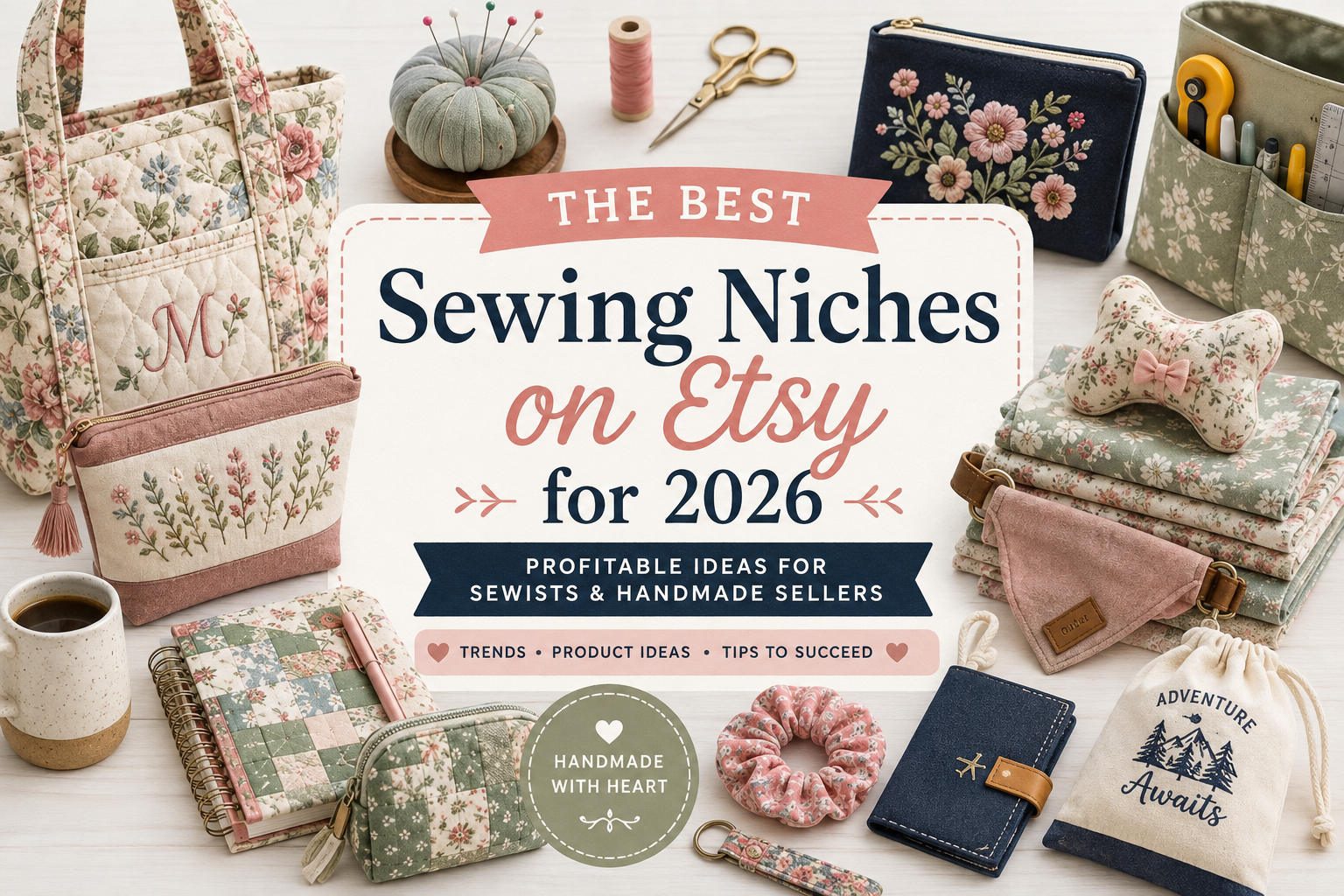
Some sewing projects are much easier to profit from than others. The best products usually have one or more of these qualities: they are quick to make, easy to batch, useful, giftable, customizable, or digital.
1. Digital Sewing Patterns
Digital sewing patterns can be very profitable because you create the product once and sell it repeatedly. There is no fabric cost, no shipping, and no physical inventory.
Examples include:
- Bowl cozy patterns
- Sunglasses case patterns
- Dog bandana patterns
- Tote bag patterns
- Zipper pouch patterns
- Beginner sewing project bundles
Digital products still take work. You need clear instructions, good photos, pattern templates, and customer support. But once the pattern is finished, it can continue earning.
2. Small Practical Handmade Items
Small items are often better than large, complicated projects because they take less time and are easier to ship.
Good examples include:
- Key fobs
- Fabric baskets
- Bowl cozies
- Reusable snack bags
- Car trash bag holders
- Dog waste bag holders
- Sunglasses cases
- Makeup remover pads
- Gift card holders
- Zipper pouches
These products work well because they solve everyday problems and can often be made in batches.
3. Personalized Gifts
Personalized sewing projects can command higher prices because they feel special. Customers are often willing to pay more for a gift that feels custom.
Ideas include:
- Monogrammed bags
- Personalized baby gifts
- Memory pillows
- Embroidered handkerchiefs
- Custom pet items
- Teacher gifts
- Bridal party gifts
The key is to charge for the customization time, not just the fabric.
4. Alterations and Repairs
Alterations can be one of the most consistently profitable sewing services because people always need clothing hemmed, repaired, adjusted, or customized.
Common services include:
- Hemming pants
- Taking in waistbands
- Repairing seams
- Replacing zippers
- Shortening dresses
- Mending uniforms
- Adjusting formalwear
This type of sewing business is especially profitable if you are fast, accurate, and reliable.
5. Sewing Classes and Tutorials
If you enjoy teaching, sewing knowledge itself can become a product.
You could offer:
- Beginner sewing classes
- PDF project tutorials
- Video tutorials
- Pattern bundles
- Sewing workshops
- Paid memberships
- Skill-based mini courses
This is a great option because you are not limited to selling finished items.
Sewing Projects That Are Harder to Profit From
Not every handmade item is worth selling. Some projects take too long, cost too much to ship, or are difficult to price high enough.
Be careful with:
- Large quilts sold at low prices
- Complicated custom orders
- Clothing that requires many fittings
- Oversized home decor items
- Products with expensive fabric but low perceived value
- One-of-a-kind items that cannot be repeated easily
This does not mean you should never make these items. It just means they need to be priced carefully.
How to Know If a Sewing Project Is Profitable
Before selling any sewn item, run the numbers.
Use this simple formula:
Materials + Labor + Fees + Packaging + Profit = Selling Price
For example, if a product costs $4 in fabric and supplies, takes 30 minutes to make, has $2 in packaging and fees, and you want to pay yourself $20 per hour, your price should not be $8.
That item would need to be priced closer to:
- $4 materials
- $10 labor
- $2 fees/packaging
- $4+ profit cushion
That means the selling price should be around $20 or more, not $8.
The U.S. Small Business Administration recommends calculating startup costs and estimating when your business will turn a profit, which is exactly the kind of thinking sewing sellers need to apply before launching or expanding.
Tips to Make Sewing More Profitable in 2026
Batch Your Projects
Sewing one item at a time can be slow. Cutting several pieces at once and sewing in batches can save time and increase your hourly profit.
Track Every Cost
Do not guess. Track fabric, thread, interfacing, zippers, snaps, packaging, labels, printer ink, website costs, listing fees, and shipping supplies.
Choose Repeatable Products
A repeatable product is easier to photograph, list, describe, and remake. This is why patterns, pouches, cozies, bags, and small accessories can work well.
Improve Your Photos
Good photos help customers understand the size, use, and quality of your product. Show the item in use, styled clearly, and photographed from multiple angles.
Use SEO Keywords
Whether you sell on Etsy, your own website, or social media, keywords matter. Use phrases your customer would actually search for, such as:
- beginner sewing pattern
- handmade zipper pouch
- bowl cozy sewing pattern
- reusable fabric gift bag
- dog bandana sewing pattern
- handmade teacher gift
- easy sewing project
Build More Than One Income Stream
The most profitable sewing businesses often do not rely on only one type of income.
You might combine:
- Etsy sales
- Digital sewing patterns
- Blog income
- Affiliate links
- YouTube tutorials
- Email marketing
- Craft fairs
- Custom orders
- Local alterations
This makes your business more stable.
So, Is Sewing Still Worth It?
Yes, sewing is still worth it in 2026 if you are willing to be intentional.
Sewing is not profitable when you underprice your work, ignore your time, or try to compete with mass-produced prices. But sewing can be profitable when you choose smart products, price with confidence, and build systems that save time.
The most successful sewing sellers are not just good at sewing. They also learn how to market, photograph, price, package, and promote their work.
So if you have been wondering whether it is too late to start a sewing business, the answer is no. There is still room for creative, practical, well-made sewing products.
Just make sure your business supports your creativity instead of draining it.
Final Thoughts
Sewing can still be profitable in 2026, but the profit is in the planning. Choose projects that are useful, repeatable, and priced correctly. Pay yourself for your time. Keep your costs organized. And remember that your skill has value.
You are not just selling fabric and thread.
You are selling creativity, usefulness, quality, and handmade care.
Subscribe to our newsletter!